
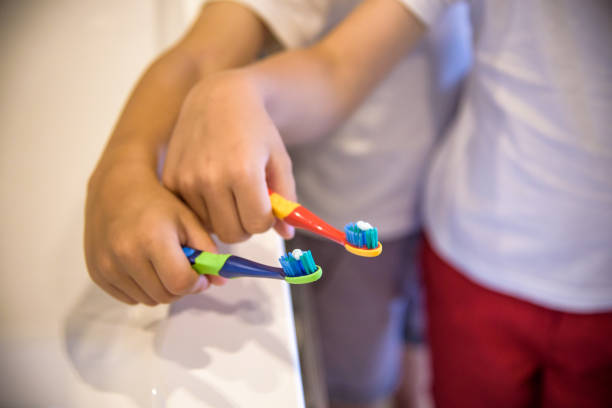
If you have searched online for advice about fluoride, you have probably found conflicting answers. One source says to start with the first tooth. Another says to wait until your child can spit. Meanwhile, the toothpaste aisle offers toddler formulas, training pastes, and products with very different ingredients. At Ehrenman & Khan Pediatric Dentistry in Westbury, on Long Island, we help parents turn those mixed messages into a practical routine for protecting their children’s teeth.
Here is the starting point: the American Dental Association and American Academy of Pediatric Dentistry recommend brushing with fluoride toothpaste as soon as the first tooth appears. For children younger than three, the amount should be no larger than a grain of rice. From ages three through six, use no more than a pea-sized amount.
Fluoride has been studied extensively and remains an effective tool for cavity prevention when used appropriately. Understanding the amount to use, how to supervise brushing, and when to ask for individual guidance makes that recommendation easier to follow. Let’s walk through how it works and what it means at each stage of childhood.
Fluoride is a naturally occurring mineral found in water, soil, and other sources. In dental care, it helps enamel resist the acids that lead to tooth decay. Toothpaste delivers a small amount directly to the surfaces you are brushing.
Enamel may look solid and unchanging, but its mineral balance changes throughout the day. Eating, drinking, saliva, plaque, and oral hygiene all influence whether a tooth loses minerals or regains them. Fluoride supports the protective side of that balance.
It works alongside brushing rather than replacing it. A toothbrush disrupts plaque, while fluoride helps protect the enamel beneath it. Children still need effective cleaning, sensible eating and drinking habits, and regular examinations.
Plaque is a film of bacteria that collects on teeth. Some of those bacteria use sugars and starches from foods and drinks to produce acids. These acids can dissolve minerals from enamel, a process called demineralization.
Saliva helps neutralize the acids and supplies calcium and phosphate that can return to weakened enamel. This repair process is called remineralization. Fluoride helps minerals return to areas of early damage and makes the repaired enamel more resistant to future acid exposure.
When mineral loss repeatedly exceeds repair, an area may become chalky white. If the process continues, the surface can break down into a cavity. Fluoride can help stop or reverse early decay while the tooth surface remains intact. It cannot regrow a piece of tooth that has already been lost or close an established hole.
This is why daily prevention matters even when teeth look healthy. You do not have to wait for a visible problem before helping enamel resist damage.
Baby teeth need protection from the time they erupt. Their enamel is thinner than the enamel of permanent teeth, leaving less protective tissue between the surface and the inner tooth. Once decay develops, it can progress and become painful.
Young children also depend on adults to clean their teeth. A toddler may enjoy holding a brush without being able to reach the back molars or clean along the gums. Frequent exposure to sugary drinks or snacks can add to the challenge.
These teeth have work to do for years before they fall out. They help children chew and speak, and they help maintain space for permanent teeth. Protecting them can reduce the likelihood of toothaches, infections, and treatment during early childhood.
Fluoride for baby teeth is therefore part of caring for the teeth your child needs now. Waiting for permanent teeth misses an important opportunity for prevention.
The first tooth is the milestone that starts brushing with fluoride. You do not need to wait for a full row of teeth or for your child to master spitting. The recommendation accounts for young children’s limited ability to spit by using a very small amount.
The amount changes at the third birthday: children younger than three use the rice-sized smear, and children ages three through six use the pea-sized amount.
Before teeth erupt, you can gently wipe your baby’s gums with a clean, soft, damp washcloth. This introduces a predictable mouth-cleaning routine and gives you a chance to look for changes as teeth begin to emerge.
There is no tooth surface to brush yet, so toothpaste is not needed for gum cleaning. Use a light touch and avoid scrubbing tender tissue.
Once the first tooth breaks through, switch to a small, soft-bristled infant toothbrush and the recommended smear of fluoride toothpaste. A dental visit should be scheduled within six months of the first tooth’s appearance and no later than the first birthday. An early visit gives parents a chance to practice brushing with guidance before problems develop.
From the first tooth until your child’s third birthday, use a smear of fluoride toothpaste no larger than a grain of rice. Brush twice daily, including before bed.
The caregiver should put the paste on the brush. A thin rice-sized smear is much less than a ribbon covering the bristles, and a toddler does not need extra paste when more teeth appear.
Gently clean every erupted tooth, including its front, back, and chewing surface where present. For a baby, a supported position that lets you see inside the mouth often makes brushing easier. Ask your dental team to demonstrate if you are unsure how to hold the brush or support your child’s head.
Encourage spitting as your child becomes able, but do not postpone fluoride use solely because that skill has not developed. Controlling the amount is especially important during this stage.
Beginning at age three, use no more than a pea-sized amount. Continue brushing twice a day with an adult dispensing the paste and helping with the cleaning.
A pea-sized amount is a small rounded dab, not a stripe along the whole brush head. More foam does not mean better protection.
Teach your child to spit out excess toothpaste when able. Rinsing with a large mouthful of water immediately afterward is unnecessary and washes away fluoride left on the teeth. A child who is still learning to spit needs supervision and individual guidance if swallowing remains a concern.
This is also a good time to make a repeatable brushing sequence: outer surfaces, inner surfaces, and chewing surfaces. Young children can take a turn first, followed by an adult finishing the areas they missed.
An older child may be ready for more responsibility, but age alone does not guarantee thorough brushing. Reaching back teeth, cleaning near the gumline, and remembering every surface require coordination and attention.
Continue watching and helping until your child demonstrates that they can brush effectively. Many children need hands-on help into the early school years, and some need support longer. Children with sensory challenges, motor difficulties, or orthodontic appliances may benefit from additional adjustments.
After age six, follow your dentist’s and the product’s directions for the amount used; there is no need to cover the brush with a large ribbon. Continue twice-daily brushing for about two minutes, spitting out excess paste, and avoiding swallowing. Prescription-strength toothpaste should be used only when specifically recommended for that child.
Professional recommendations support children’s fluoride toothpaste because of its cavity-prevention benefits. Appropriate use includes both the right product and the right amount. A rice-sized smear of ordinary toothpaste is a different exposure from eating toothpaste from a tube or swallowing a concentrated prescription product.
At Ehrenman & Khan Pediatric Dentistry, we can review your child’s cavity history, brushing habits, ability to spit, and other fluoride sources. Long Island families may use different water supplies, bottled water, or filtration systems, so those details help us give useful advice about any additional products.
Routine toothpaste recommendations do not mean every child needs fluoride drops, a rinse, or prescription paste. Those decisions require a separate assessment.
Dental fluorosis is a change in enamel appearance that can occur when a child regularly consumes excessive fluoride while teeth are developing under the gums. It commonly appears as faint white lines or flecks. Most cases in the United States are mild and cosmetic, without pain or a loss of tooth function.
More severe fluorosis can involve staining or surface changes. A dentist should assess unexplained tooth discoloration because white marks can have other causes, including early decay or developmental enamel defects unrelated to excessive fluoride.
Using the recommended amount, supervising brushing, and preventing children from eating toothpaste reduce unnecessary ingestion. Reviewing supplements and drinking-water sources also helps. Fluorosis is not the same as a cavity, and stopping fluoride without understanding a mark’s cause may remove a useful form of protection.
Young children often swallow some toothpaste during brushing. That is part of the reason the recommended amount is so small before age three. The aim is to provide enamel protection while limiting how much is swallowed.
Keep the tube under adult control and store toothpaste and other dental products out of reach between uses. A flavor your child accepts can make brushing easier, but explain that toothpaste is for cleaning teeth rather than eating.
Swallowing a small amount during normal brushing is generally unlikely to cause harm. Eating a larger amount can cause stomach upset, and the risk depends on the product, amount, and child’s size. If your child eats toothpaste from the tube, swallows a prescription product, has symptoms, or you are unsure how much was swallowed, contact Poison Control at 1-800-222-1222 in the United States. Keep the package available and do not induce vomiting.
“Children should wait until they can spit.” ADA and AAPD recommendations start at the first tooth. The rice-sized smear for children younger than three limits ingestion while providing topical protection.
“Fluoride only helps permanent teeth.” Baby teeth benefit, too. Preventing decay in primary teeth helps children avoid pain and maintain comfortable chewing during the years those teeth are needed.
“A fluoride-free training paste provides the same protection.” Brushing removes plaque, but a product without fluoride does not provide fluoride’s established anticavity effect. A “toddler” label alone does not tell you whether the product contains it.
“More toothpaste works better.” Increasing the amount beyond age-based guidance adds unnecessary material to swallow. Thorough, consistent cleaning is more useful than a brush covered in paste.
“Any headline about fluoride applies to brushing.” Research about long-term ingestion at particular exposure levels cannot automatically be applied to a supervised smear of toothpaste. Questions about dose, route, and duration matter. Bring specific concerns to your child’s dentist so they can be discussed in context.
Knowing the recommendation is one part of prevention. Making it manageable on a tired morning or at bedtime is another. A simple routine that an adult can repeat consistently is usually more useful than a complicated collection of products.
Choose a brush with soft bristles and a head small enough to reach comfortably inside your child’s mouth. An infant brush should allow gentle access to the first teeth; a larger child’s brush should still fit behind the back molars.
Manual and powered brushes can both work when used correctly. The better choice is one your child tolerates and that lets you clean thoroughly. Check the manufacturer’s age guidance for powered models, and keep the pressure gentle.
Replace a brush when the bristles become worn or frayed, generally about every three to four months or sooner if needed. Store it upright where it can air-dry, and do not share toothbrushes.
For toothpaste, check the active ingredients rather than relying on the package’s age range or cartoon character. Look for fluoride and, when choosing an over-the-counter anticavity product, consider one with the ADA Seal of Acceptance. A mild flavor may help a child who finds strong mint uncomfortable.
Brush in the morning and before bed. Linking brushing to something your child already does, such as getting dressed or putting on pajamas, can make it easier to remember.
Aim for about two minutes as teeth fill the mouth, while making sure each erupted tooth is cleaned in babies with only a few teeth. A song or timer can help older children understand the time involved. Letting your child choose between two suitable brushes can offer some control without making brushing optional.
After bedtime brushing, offer water rather than juice, milk, or a snack when possible. Avoid putting a child to sleep with a bottle containing anything other than water. If nighttime feeding is still part of your baby’s routine, discuss a realistic cleaning and cavity-prevention plan with the dentist.
Keep expectations calm and predictable. If brushing regularly causes pain, gagging, or distress, ask for help identifying the reason and adapting the routine.
Stand or sit where you can see your child’s teeth clearly. Lift the lip gently when needed so the brush reaches the gumline, and use small, gentle movements rather than hard scrubbing.
Move through the mouth in the same order each time. Clean the outside and inside of the teeth and the chewing surfaces of the molars. Back teeth and the area beside the gums are easy to miss when children brush independently.
Once two teeth touch, add daily flossing between them. Fluoride paste cannot replace cleaning a tight contact that the brush cannot reach.
If your child wants to brush alone, let them practice and then give yourself a finishing turn. You can gradually hand over responsibility as their skills improve. During dental visits, ask us to demonstrate on your child’s teeth and show you any areas where plaque remains. Specific guidance is easier to put into practice than a general instruction to “brush better.”
Yes, fluoride toothpaste is recommended for toddlers when used in the appropriate amount with adult supervision. For children younger than three, use a smear no larger than a grain of rice. Starting at age three, use no more than a pea-sized amount. An adult should dispense the paste and help brush twice daily. Your child does not have to master spitting before starting; the small amount accounts for that developmental stage. Ask your dentist for guidance if swallowing, sensory needs, or a medical condition makes routine brushing difficult.
A small amount swallowed during normal brushing is generally unlikely to cause harm. Larger amounts can cause stomach upset, and the risk depends on the toothpaste’s fluoride concentration, the amount swallowed, and your child’s size. If your child eats paste from the tube, swallows a prescription product, develops symptoms, or you do not know how much was swallowed, contact U.S. Poison Control at 1-800-222-1222 for advice. Keep the tube available so the specialist can identify the product. Do not induce vomiting or wait for symptoms before calling about a concerning exposure.
Fluoride-free toothpaste can be used for brushing, but it does not provide fluoride’s established protection against cavities. The ADA and AAPD recommend age-appropriate amounts of fluoride toothpaste beginning with the first tooth. A product labeled “training” or “safe to swallow” may contain no fluoride, so check the active ingredients. If your child dislikes a particular paste, a different flavor or texture may make brushing easier. Discuss your concerns with the dentist before switching, especially if your child already has cavities, weakened enamel, or other factors that increase decay risk.
Some bottled water contains naturally occurring or added fluoride, while other products contain very little. Do not assume that every brand provides the same amount or enough for cavity-prevention benefits. Labels may not list the concentration, so the manufacturer may be the best source for that information. Tell your child’s dentist if bottled water is the main drinking-water source, and mention home filtration or private well water, too. This helps guide decisions about supplements or additional prevention. Children generally still need fluoride toothpaste regardless of whether their drinking water contains fluoride.
The general ADA and AAPD recommendation is to use an age-appropriate amount twice daily for all children once teeth erupt. Individual circumstances can affect the product, technique, level of assistance, and need for additional prevention. For example, a child with difficulty spitting may need closer supervision, while a child with high cavity risk may need professional fluoride treatment. These adjustments do not automatically require avoiding standard toothpaste. If you have concerns about ingredients, swallowing, or a health condition, ask your pediatric dentist for a plan that fits your child.
The first tooth is the right time to begin a fluoride brushing routine, and preventive dental visits help you adjust that routine as your child grows. An examination gives us a chance to assess enamel, check for early decay, and answer practical questions about toothpaste amounts, brushing technique, and additional protection.
At Ehrenman & Khan Pediatric Dentistry in Westbury, we help Long Island parents build habits that fit their children’s stage of development. Whether you are cleaning a baby’s first tooth or helping a school-aged child brush more independently, we can explain what matters now and what to watch for next.
Schedule your child’s routine pediatric dental visit for personalized guidance on fluoride use, cavity prevention, and keeping growing teeth healthy.

